One City. One Problem.

Episode 02 | Resilience and emergency readiness

Preparing for Wildfire

The hazard map is not the readiness plan.

The risk is known, but the work is spread across departments and jurisdictions. How does a community turn fragmented data into a defensible readiness plan?

Date
Wednesday, October 14, 2026
Time
1:00 – 2:30 PM ET
Duration
90 minutes, virtual
Reserve your seat
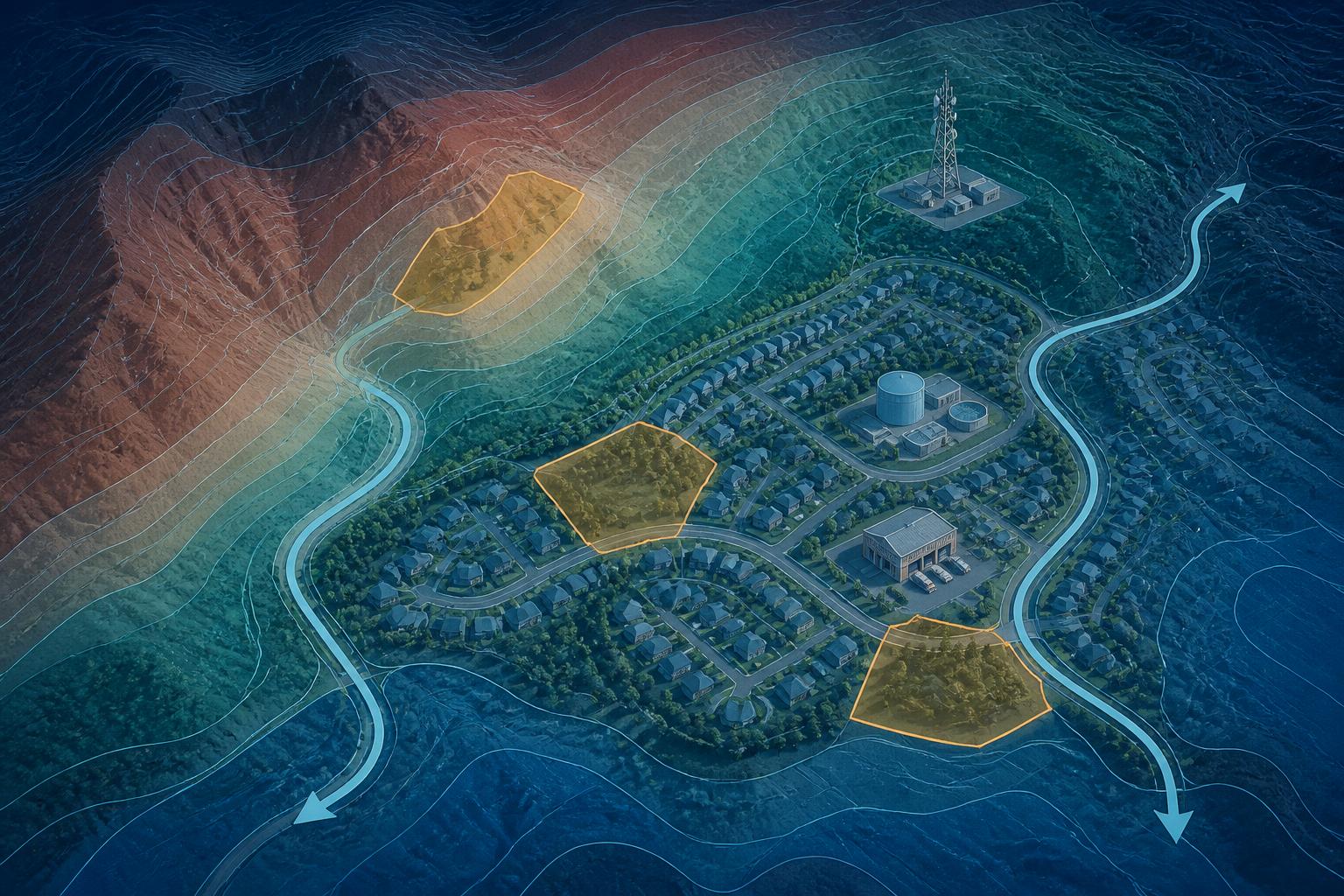
Illustration for Preparing for Wildfire

The situation

A fast-growing community sits at the wildland-urban interface. Vegetation conditions are changing, evacuation routes are constrained, critical assets span multiple jurisdictions, and mitigation funding must be prioritized before fire season.

The city has data, plans, and experienced people — but not yet one operational picture.

The decision

Where should the community act first to reduce risk, protect critical services, and make evacuation more reliable before the next fire season?

Three expert contributions

Three disciplines, one shared decision node

01

Risk and landscape intelligence

How should the community translate terrain, fuels, weather, structures, and historical conditions into priority areas?

Show how multiple risk factors are combined, updated, and communicated. Distinguish screening-level insight from field-verified conditions and avoid implying false certainty.

02

Critical assets and field readiness

Which assets, routes, and field conditions must be verified before an emergency?

Show how teams can identify vulnerable facilities, hydrants, communications, access points, defensible space, and route constraints. Focus on ownership, inspection cadence, and closing data gaps.

03

Evacuation and mitigation decisions

How does the community convert the risk picture into prioritized projects, triggers, and public actions?

Show how evacuation modeling, mitigation scenarios, resource constraints, and community communication inform a defensible near-term plan.

What the roundtable will test

  • What must happen first?
  • What evidence is good enough to make a decision?
  • Where do workflows or data need to connect?
  • What can be done now, and what requires a longer program?
  • How should the city explain the recommendation to leadership and the public?

Roundtable prompt

The city has one pre-season budget cycle and cannot address every risk. Which actions are essential now, and how should leaders justify the priorities?

You will leave with

  • A three-step decision path
  • A clearer view of roles and dependencies
  • Questions to ask internally and of potential partners
  • A concise event recap and resource sheet

Three-step takeaway

  1. 01Establish a shared and current risk picture.
  2. 02Verify critical assets, routes, and operational gaps.
  3. 03Fund the highest-consequence mitigation and readiness actions.

Audience takeaway asset

90-Day Wildfire Readiness Canvas

Owners, evidence, priorities, triggers, and public communication.

The 75-minute format

  1. 01 · 10 minutes

    The problem

    The moderator introduces the city, the stakes, the constraints, and the decision.

  2. 02 · 15 minutes each

    Three expert contributions

    Each expert answers one assigned question and shows one useful visual or example.

  3. 03 · 20 minutes

    Moderated roundtable

    The speakers connect the pieces, surface tradeoffs, and agree on sequence.

  4. 04 · 10 minutes

    Audience Q&A

    Attendees bring the problem into their own operating context.

  5. 05 · 5 minutes

    The takeaway

    The moderator closes with three practical next steps.

Speaker brief for this episode

What contributors prepare

City problem
A WUI community must prioritize readiness and mitigation before fire season with incomplete, cross-jurisdictional information.
Contribution roles
Risk and landscape intelligence; critical assets and field readiness; evacuation and mitigation decisions.
Required visual
One risk, asset, route, or prioritization view that distinguishes known conditions from assumptions.
Roundtable preparation
Bring one immediate action, one field-verification need, and one decision trigger.
Avoid
Sensational imagery, deterministic predictions, or advice that ignores local emergency-management authority.

Reserve your seat

All fields marked required are needed to confirm your registration.